
After more than 25 years working at the intersection of digital marketing, hotel commercial strategy, and hospitality tech, and speaking to hundreds of hotel operators, I’ve seen one recurring pattern play out again and again:
Hotels lose faith in advertising not because ads “don’t work,” but because they are almost always executed in isolation.
It usually goes something like this: A hotel runs Google Ads. Or Meta Ads. Or Hotel Ads. Traffic increases. Costs rise. OTA bookings go up. Direct bookings barely move. And the conclusion becomes: “We tried ads. They didn’t work for us.” In reality, ads were never the problem. The problem was the absence of an effective system and strategy.
In this article, I want to be very direct about something that is often uncomfortable to say in our industry:
Hotel ads campaigns are fundamentally different from standard digital advertising, and in my opinion, most generalist ad agencies are simply not equipped to run them effectively. This is not a criticism. It’s a structural reality.
Why Hotel Ads Are Different from Almost Every Other Industry
Most digital ad agencies are built to do one thing very well: drive traffic. They usually optimise for:
- Clicks
- CTR
- CPC
- Impressions
- “Leads”
In e-commerce or lead-generation businesses, that can work. In hospitality, it often fails. Hotels are not selling a simple product. A hotel booking decision is most often influenced by:
- Dates and availability
- Rate parity and comparisons
- OTA visibility
- Cancellation terms
- Device behaviour
- Seasonality
- Length of stay
- Loyalty status
- Prior search behaviour
A click without conversion context is meaningless. This is why running hotel ads as a standalone tactic, disconnected from the booking engine, revenue strategy, and website UX, rarely produces sustainable results.
The Most Common Scenario We See
Many of our clients come to us after having lost confidence in paid advertising altogether. Their stories are remarkably consistent:
- “We spent money on ads but didn’t see real direct growth.”
- “OTAs benefited more than we did.”
- “Traffic increased, but bookings didn’t.”
- “The agency kept reporting clicks, not revenue.”
In almost every case, ads were treated as the strategy, rather than as one component of a broader direct revenue system. This is the core misunderstanding. Ads are not the engine. Ads are the accelerator. If the engine underneath is weak, no amount of acceleration will get you where you want to go.
Performance Marketing Only Works When the System Is Built Correctly
At The Percentage Company, we do not view ads as an isolated service. We view them as part of a holistic, system-driven direct revenue strategy. Performance marketing works only when the following elements are aligned:
- Conversion-focused website UX
- A booking engine designed to sell, not just display rates
- A clear direct value proposition
- Rate strategy and parity control
- CRM, loyalty, and retention mechanics
- Proper attribution and COA tracking
Our goal is not to “drive traffic.” Our goal is to protect and grow direct channel revenue over time, at the lowest sustainable Cost of Acquisition (COA). That distinction matters.
Why Large, General Ad Agencies Often Underperform in Hospitality
Large, generalist ad agencies are excellent at scale. But scale does not equal suitability. Most of them:
- Do not control or understand the booking engine
- Do not influence rate strategy or parity
- Do not integrate loyalty or member pricing
- Do not measure true relative COA
- Do not actively manage OTA cannibalisation
As a result, ads may generate demand, but that demand often leaks back to OTAs, where conversion friction is lower and messaging is clearer. From the hotel’s perspective, it looks like ads “don’t work.” From the OTA’s perspective, ads work beautifully. This is why hotel advertising in my opinion requires specialists, not generalists.
Ads Must Be Interlinked with Hotel Operations
One of the most overlooked truths in hotel marketing is this: Marketing performance is directly constrained by operational decisions. Ads cannot fix:
- Poor availability management
- Inflexible cancellation policies
- Uncompetitive direct rates
- Weak mobile booking journeys
- Slow booking engines
Effective hotel ads must be interlinked with:
- Revenue management
- Inventory strategy
- Pricing rules
- Loyalty mechanics
- Front office alignment
When marketing and operations work in silos, performance collapses.
How We Structure Hotel Ads Campaigns to Protect the Direct Channel
To address the very real risk of OTA cannibalisation, our ad strategy is deliberately conservative, targeted, and revenue-focused. Some of the key areas we focus on include:
1. High-Intent Targeting
We prioritise:
- Branded search
- Long-tail destination + hotel queries
- Bottom-of-funnel intent
- Return visitors and remarketing
We deliberately avoid over-investing in broad, disengaged awareness traffic that is statistically more likely to browse and later convert via OTAs. Traffic quality beats traffic volume every time.
2. Rate Parity & Comparison Clarity
We actively leverage booking engine tools that:
- Show OTA price comparisons
- Reinforce parity or direct value
- Remove uncertainty during decision-making
Guests do not need persuasion. They need reassurance. If booking direct feels unclear or risky, they will default back to OTAs.
3. Strong Direct Incentives
Direct bookings must offer clear, defendable value, such as:
- Closed user group or member-only rates
- Value-added inclusions
- Flexible terms
- Loyalty points or future benefits
OTAs compete on price and convenience. Hotels must compete on relationships and value.
4. Audience & Placement Controls
Not all traffic should be welcomed. We actively:
- Exclude placements that leak demand
- Control overlap with OTA bidding
- Refine audiences continuously
More traffic is not better traffic.
5. Integrated Tracking & Continuous Optimisation
We constantly analyse:
- Search terms
- Assisted conversions
- Drop-off points
- Booking journey behaviour
If ads are indirectly boosting OTA bookings, we adjust. If a campaign supports direct conversion, we scale it. This is ongoing work, not a setup-and-forget exercise.
Aligning Ads with Website, Booking Engine & Loyalty
Ads should never promise something the booking journey cannot deliver. This is why we tightly align:
- Ad messaging
- Landing page UX
- Booking engine copy
- Member programme visibility
When the guest sees the same value proposition reinforced at every step, conversion friction drops dramatically. This is also where member programmes play a critical role. Even simple loyalty mechanics can:
- Reduce price sensitivity
- Increase repeat bookings
- Lower blended COA over time
We also increasingly integrate affiliate and influencer tracking, allowing hotels to:
- Track performance-based partnerships
- Attribute bookings accurately
- Avoid paying blindly for “exposure”
Again, this only works when the tech stack is designed properly.
Ads Are Only One Part of the Marketing Mix
Another critical mistake hotels make is expecting ads to do everything.
Ads are:
- Short to medium-term demand drivers
SEO, CRM, and retention are:
- Medium to long-term efficiency builders
A healthy direct strategy includes:
- High-intent paid acquisition
- SEO-driven organic growth
- CRM and repeat guest monetisation
If any one of these elements fails, the entire chain suffers. This is why we repeatedly say: Direct marketing is a system, not a tactic.
Best-in-Class Technology Matters
Hotels often rely on:
- Legacy booking engines
- Generic websites
- “What they’re familiar with”
Familiarity does not equal performance. The hotels that win long-term are those that invest in:
- Conversion-optimised booking engines
- Advanced rate comparison tools
- CRM and loyalty infrastructure
- Proper attribution and reporting
Outsourcing ads without upgrading the underlying technology is like pouring water into a leaking bucket.
The Strategic Reality: Lower COA Drives Profitability
Everything ultimately comes back to the cost of acquisition. A properly executed direct channel:
- Lowers blended COA over time
- Reduces dependency risk
- Improves margin control
- Increases asset value
Ads are not about “spending money.” They are about replacing higher-cost bookings with lower-cost ones, systematically and sustainably. When done correctly, ads are not an expense. They are a redistribution of acquisition cost away from OTAs and back into your own ecosystem.
My Final Thoughts
After decades in this industry, my view is clear:
- Hotel ads do not fail.
- Poor execution fails.
- Isolation fails.
- Generalisation fails.
Hotels that outsource advertising should do so to specialists who understand hotel economics, booking technology, and distribution strategy, not just media buying.
At The Percentage Company, we do not sell ads. We build direct revenue systems. Ads are simply one of the tools we use to protect and grow your most valuable channel: direct bookings.
If you are running ads today and feel they are underperforming, the question is not “Should we stop?”
The question is “Is the system underneath strong enough to support them?”
If you’d like an honest assessment of your current setup, your COA, and your direct growth potential, we’re always happy to talk. Because in hotel marketing, success is never about doing more. It’s about doing the right things, in the right order, with the right expertise.
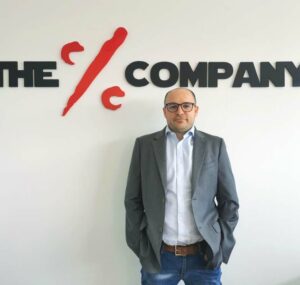
Written By: Edward Kennedy
Co-Founder & Director at The Percentage Company. I started working on websites in 1997 and have been a full-time techie since 2001. I’m committed to leveraging the latest technologies and digital marketing techniques to drive efficiency & improve online sales for our hotel clients. I have a 20+ year track record of success in growing independent hospitality & real estate brands.