

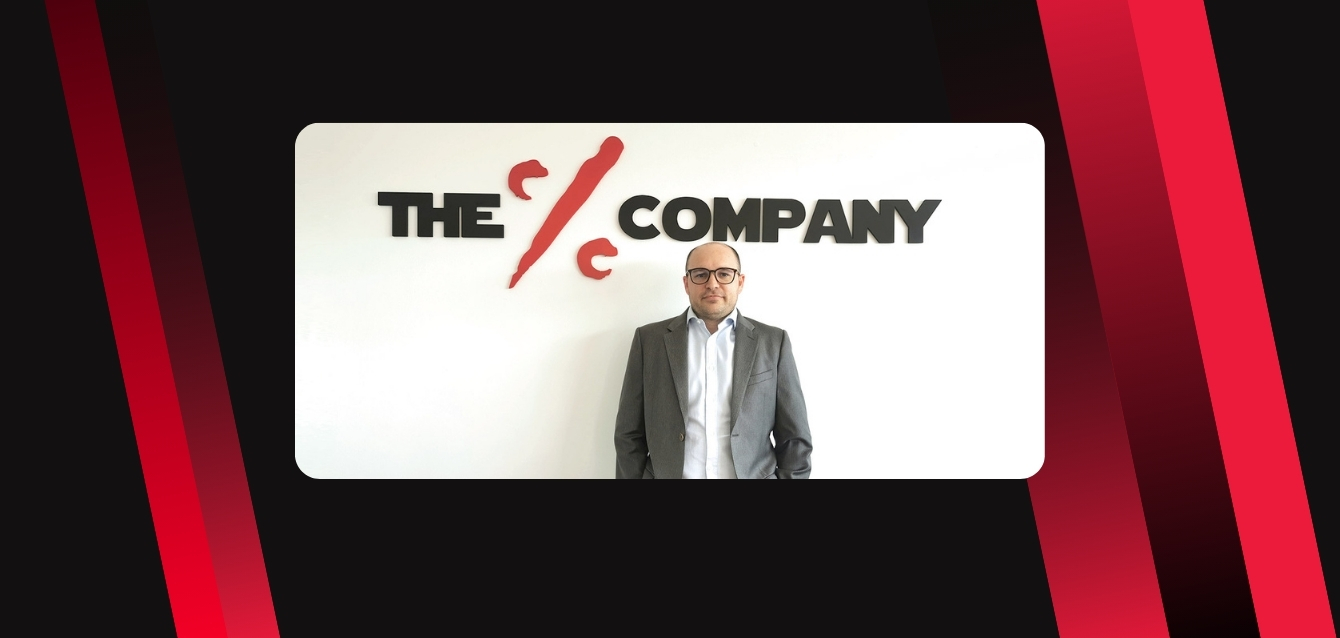
There’s a version of this story that starts in 2018, when The Percentage Company was officially registered and we opened our doors. But that version is incomplete. The real story starts in in a small office in Marbella, Spain, circa 1999, where a slightly over-enthusiastic teenager was building websites on machines that most people had never heard of, for a real estate company that was quietly becoming one of the largest in Europe. That teenager was me. And the decisions made in that office, on those machines, set the course for everything that followed.
I tell you this not because I think origin stories are inherently interesting (they often aren’t), but because understanding where The Percentage Company came from explains why we work the way we do. Our entire model, how we think about technology, how we measure results, and why we refuse to separate marketing from revenue and from Technology, is a direct product of 20 years of very specific, very hands-on experience. None of it was theoretical.
Where It Started: Spain, the Internet, and a Company That Refused to Stand Still
My father built his career at the forefront of software development, eventually running a multinational technology consultancy that worked with some of the world’s largest retailers before selling to Dun & Bradstreet in New York. He then retired at forty-six, raced a 53-foot Swan yacht all the way around the world, coming second out of thirty-six boats. These details are not incidental. They shaped how I think about ambition, timing, and what it means to actually finish something.
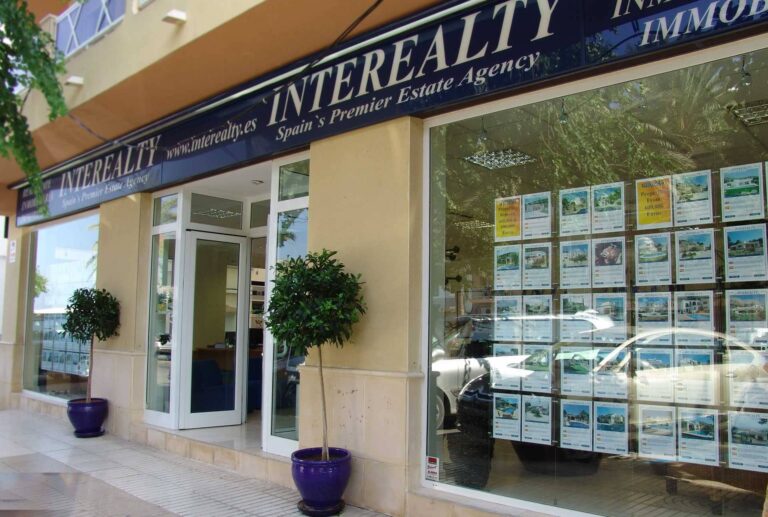
When he opened a real estate agency in Marbella following the Spanish property crash of 1992, the focus was clear from the start: use technology to outcompete everyone else. That approach, build better systems, own more of the sales process, measure everything, turned what began as a single office in Costa del Sol into a company spanning 58 real estate offices from Costa Blanca all the way to the Portugese border, the Balearic and Canary Islands, with more than 650 staff.
I was embedded in that company from a young age. Building PCs, providing IT support, working with network engineers and data centre teams, and eventually, when a mentor (one of the genuine early pioneers of SEO) introduced me to web development and search marketing, I found the thing that would define my career. At the time, before the year 2000, SEO was not really a known discipline. It was something that a very small number of people understood and an even smaller number were actually executing well. We were among them.
The network we built, with over 600 real estate websites, each targeting different regions, property types, and search terms, generated more than 3 million visitors a month and in excess of 12,000 property leads every month. We sold almost 30,000 properties over roughly a decade, at a time when most of the competition was still relying on print magazines and in-person property exhibitions.
The lesson that I took from Spain, and have never forgotten, is this: the companies that understand where their customers are looking, and build systems to meet them there, win. Not occasionally. Consistently.
Phuket, a Hotel Rebrand, and a Career That Changed Direction
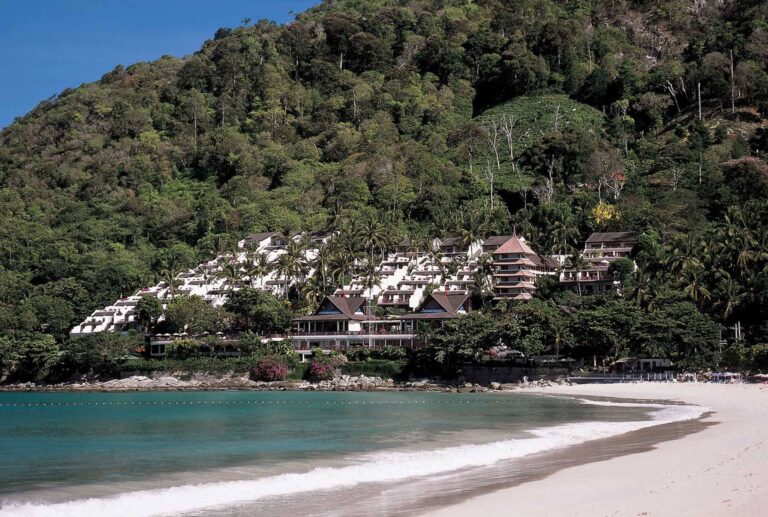
In 2007, I received a call from a British family friend who had just joined a consortium purchasing a hotel in Phuket and building a 2nd property. He knew my background having been involved with us in Spain, and asked if I could come out for two weeks to help set up the IT infrastructure following the departure of the existing operator. When I landed in Bangkok, I discovered that the hotel in question was The Royal Phuket Yacht Club, now known as The Nai Harn, and that Le Meridien had just vacated. We had a fortnight to rebrand an entire resort.
I stayed for considerably longer than two weeks.
Over the years that followed as Group IT Director, I rebuilt the technology infrastructure from scratch (server room, networks, firewalls, cabling, CCTV, reservations systems etc) and then turned my attention to what I actually cared about most: revenue. At the time, five-star properties of this scale were almost entirely dependent on offline travel agents and wholesalers. I made it a mission to reduce that dependency and shift the property toward online distribution, where we had more control over our own destiny and rates.
The results were not marginal. Within weeks of relaunching the website, setting up the OTA channels (the online travel agents that now dominate hotel distribution, such as Booking.com and Expedia), and applying the same performance marketing principles I had used in Spain, online sales revenue climbed from ten percent of total revenue to seventy percent. Without a channel manager, which at that time barely existed as a category.
That experience formed the foundation of everything we do at The Percentage Company today. Not because I want to talk about the past, but because the problem we were solving then is exactly the problem Thai hotels are still facing now: too much reliance on third-party channels, not enough commercial control, and a gap between the technology available and the willingness to use it properly.
A Decade at Triple C Hotels & Resorts: Where Revenue Management Became Serious
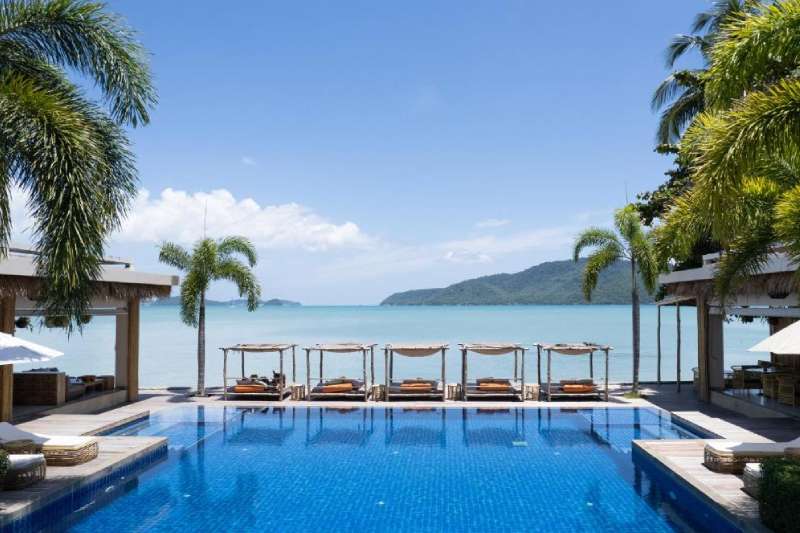
After six years at the Puravarna group, I moved into a broader role with Triple C Hotels and Resorts, where I eventually took responsibility for OTA management, reservations, digital marketing, and IT across the portfolio. This was where revenue management stopped being a supporting function and became the central discipline.
I learned that occupancy is a vanity metric if ADR (average daily rate) is moving in the wrong direction. That rate parity, which means maintaining consistent pricing across all booking channels, is not a bureaucratic exercise but a commercial necessity. That the cost of a booking matters as much as the booking itself, and that most hotels have no clear idea what their average acquisition cost actually is.
These are not complicated ideas. But they require systems, data, and a commercial culture to execute consistently. Most independent hotels in Thailand, and across Southeast Asia, have at least one of these three in reasonable shape. Very few have all three working together.
That gap is what The Percentage Company was built to close.
Building TPC: The Company I Wish Had Existed
When we founded The Percentage Company in 2018 with my partner Paolo, we had one straightforward aim: to build the kind of partner that hotels like the ones I had worked in actually needed. Not a marketing agency that produced reports. Not a software vendor that required internal expertise to run. Something that combined both: a technology platform and a team that understood the hotel business well enough to make it perform.
We have now worked with more than 727 businesses across more than ninety countries, generating over THB 2.5 billion in revenue for our clients. Across the active hotel portfolio, we avoid more than THB 57 million a year in OTA commissions. The average direct booking share among our full-service clients is 30.36 percent. These are not projections. They are what the data shows, measured consistently across thousands of room-nights.
None of those numbers came from selling software or running ads in isolation. They came from treating technology, marketing, and revenue strategy as a single connected system, which is how the best hotel operators have always thought about it, and how very few agencies or platforms are actually built to deliver.
Why the Founder Story Matters for Your Hotel
I’ve written this piece not to catalogue my career, but because the question I’m most commonly asked by hotel owners and GMs is some version of: “How do you know this will work for us?”
The honest answer is that I have spent the last twenty years in hotels, distribution systems, and digital marketing at a level that most agencies simply haven’t. I’ve managed the reservations desk and the P&L. I’ve set up OTA accounts and then spent years working to reduce dependency on them. I’ve built booking engines and then measured exactly what they converted.
When I sit down with a hotel owner to talk about their channel mix, their direct booking share, or why their website isn’t converting, I’m not drawing on industry research or third-party case studies. I’m drawing on a specific set of experiences from specific properties in specific markets.
That context shapes everything about how The Percentage Company works. The systems we’ve built, the benchmarks we use, the KPIs we report against, and the way we measure success. All of it traces back to the same fundamental belief: that technology and marketing, when properly integrated and properly measured, should produce results you can trace directly to revenue.
If you’re looking for an agency to manage your social media presence, we’re probably not the right fit. If you’re looking for a partner to build the commercial infrastructure your hotel needs to grow, reduce OTA dependency, and take genuine control of your guest journey, I’d be very happy to have that conversation.
At The Percentage Company, we work with hotels, resorts, and hospitality operators who are serious about commercial growth. Our work sits at the intersection of technology, marketing, and revenue strategy, built specifically for independent and boutique properties in Thailand and across Southeast Asia. If the challenges described above are familiar, we’d be glad to start a conversation.
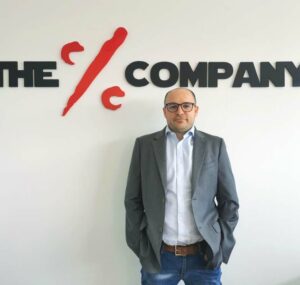
Written By: Edward Kennedy
Co-Founder & Director at The Percentage Company. I started working on websites in 1997 and have been a full-time techie since 2001. I’m committed to leveraging the latest technologies and digital marketing techniques to drive efficiency & improve online sales for our hotel clients. I have a 20+ year track record of success in growing independent hospitality & real estate brands.