

Quick question, and be honest with yourself. Could you name, and actually contact, fifty of your regular customers right now? Not their faces. Their names, their numbers, the table they always ask for, the dish they always order. Most hospitality owners I meet in Phuket cannot (during this event, 3 out of 40 attendees raised their hand), and that single gap could be one of the biggest risks their business carries.
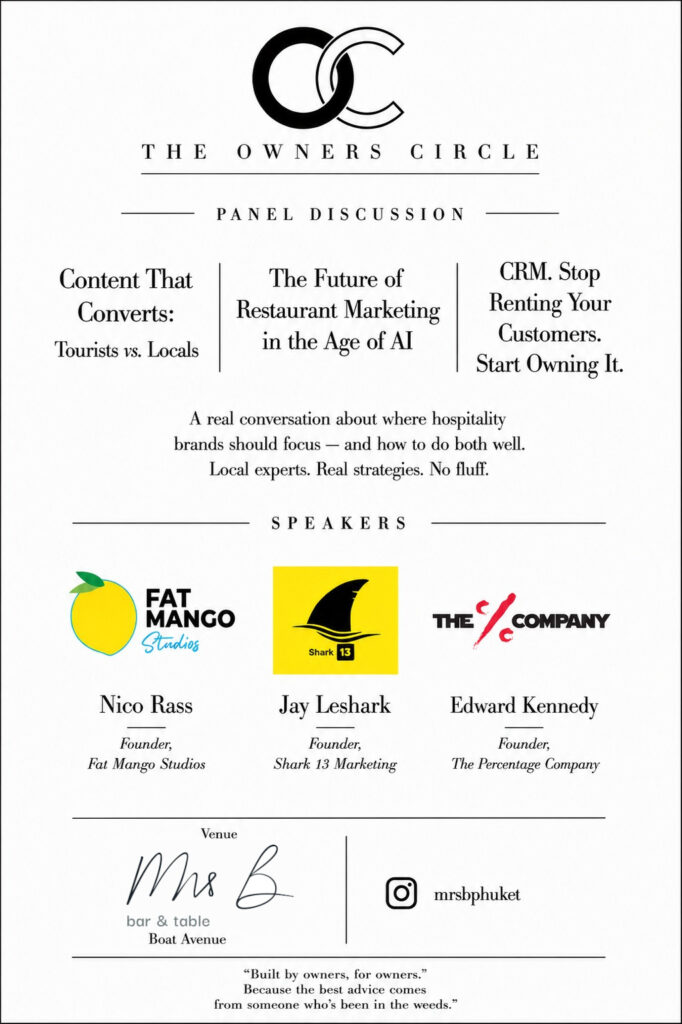
I wrote this article to go deeper on a talk I gave at The Phuket Owners Circle, an evening for local restaurant owners hosted by Sumi Soorian at Mrs B Bar & Table in Boat Avenue and Co-hosted by David Ghani of Flying Lizard. I had about ten minutes on stage, which is enough to plant an idea but not really enough to properly defend it. So consider this the longer version, the one with the reasoning filled in. After more than 20 years working in hospitality technology, digital marketing, and revenue management across Thailand, I can say this plainly: if you don’t own the customer relationship, you’re renting your business every single month.
That’s the whole idea. Stop renting your customers.
A Follower Is a Rental. A Contact Is Ownership
Social media gets you seen, and being seen matters. But attention you don’t capture is attention you’re renting. You can have ten thousand followers and still start from zero next month, because the platform owns that audience, not you. The algorithm decides who sees your post, when, and whether they see it at all. That isn’t a marketing problem you can out-create. It’s a structural fragility built into the way you’ve chosen to reach people.
And it isn’t only attention you’re renting. It’s the relationship itself.
Think about a delivery order that comes through Grab. You wrote the menu, you bought the ingredients, you cooked the food, you plated it, and you got it out the door. So who owns that customer? Grab does. They know the guest’s name, where they live, what they order, how often they order, and the moment they stop ordering. You created the entire experience, and somehow you’re the least informed person in the transaction. The business that made the meal knows the least about the person who ate it.
I’m not saying don’t use these platforms. Of course you should. Use them to get customers. Just don’t let them keep your customers. Every third-party order, every social follower, every ad click needs a bridge back to something you actually own.
Your Tech Stack Is the Biggest Marketing Decision You’ll Ever Make
That line tends to surprise people, because owners rarely think of their software choices as marketing decisions. They think of them as operational, or as a cost to be minimised. But every tool you plug in does one of two things. It either hands you the guest relationship, or it hands that relationship to a middleman.
A booking platform that keeps the guest’s contact details and shows you a masked email address has made the choice for you. A reservation tool that lets you export your own guest list and message those people directly has made the opposite choice. Both feel convenient on the day you sign up. The difference only shows up later, usually at the worst possible moment, when you realise the convenient option quietly became your landlord.
This is why I treat the question of what you own as a commercial one, not a technical one. A CRM, in plain terms, is simply the system that stores and organises everything you know about your guests so you can reach them again without paying a platform for the privilege. It is the difference between a database you control and a database somebody rents back to you one click at a time.
Google, Then Social, Now AI. The Platform Changes, the Lesson Doesn’t
For twenty-five years, marketing has chased platforms. First it was Google and getting found in search. Then it was social media and building an audience. Now it’s AI, and everyone is rightly asking what it means for their business. Each wave feels completely different from the last, and each one arrives with the same promise of reach.
But the lesson underneath never changes. If you don’t own the data, someone else controls your future on that platform. And AI makes this sharper, not softer, because AI is only as good as the data you can feed it. An AI agent analysing your own guest database can tell you who’s about to stop visiting, which offer will bring a particular guest back, and what to change tomorrow. An AI agent with no data to read is just an expensive way to write captions. The businesses that win the AI shift won’t be the ones with the cleverest tools. They’ll be the ones who already own the information those tools need.
Tourists Pay the Rent. Residents Keep the Lights On
Phuket has spectacular high seasons and brutal low ones. Every year, owners look around in the quiet months and ask the same question: where did everyone go? The honest answer is uncomfortable. They were never yours to begin with. They were tourists passing through, found and paid for once, and gone the moment the season turned.
The businesses that survive Phuket’s swings aren’t always the best restaurants or the smartest bars. They’re the ones that built a base that doesn’t reset to zero every month. Residents are the people who keep your reviews fresh, keep the room looking busy on a Tuesday, and keep you visible when the tourists thin out. They aren’t your backup plan. They’re your insurance policy. And you can only build that base if you’re capturing relationships, not just serving transactions.
What Ownership Looks Like on a Profit and Loss
This isn’t theory, and I don’t ask anyone to take it on faith. Two examples from our own client work make the point better than I can.
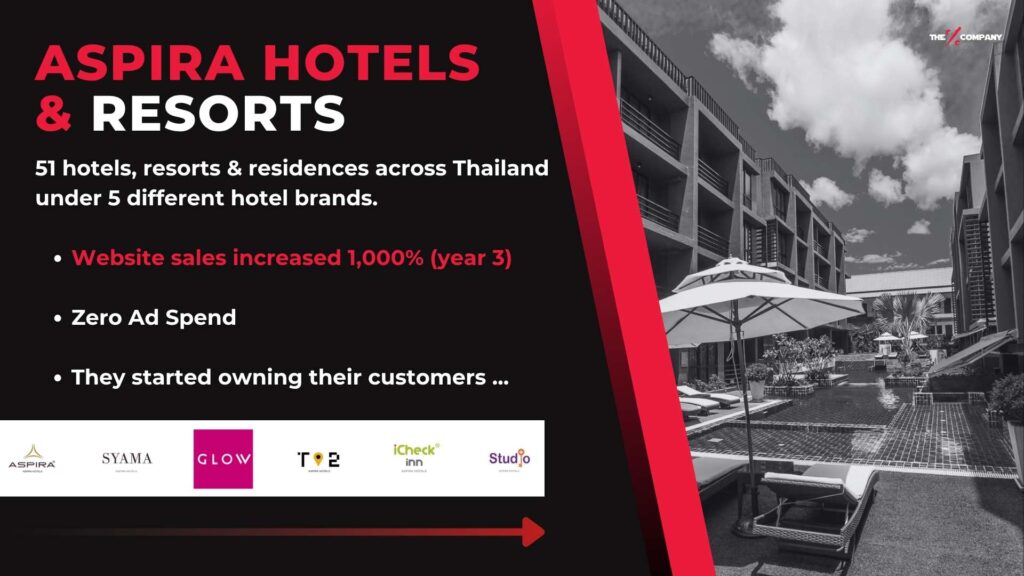
Aspira Hotels and Resorts is a Thai group with 51 properties. We built them a membership programme, the kind that sells to people who already belong and rewards them for coming back. By year three, their direct website sales had grown by over 1,000 per cent, without spending a single baht on paid advertising, with more than 20,000 active members now in the programme. That growth came from people they already owned, not from audiences they had to keep renting.
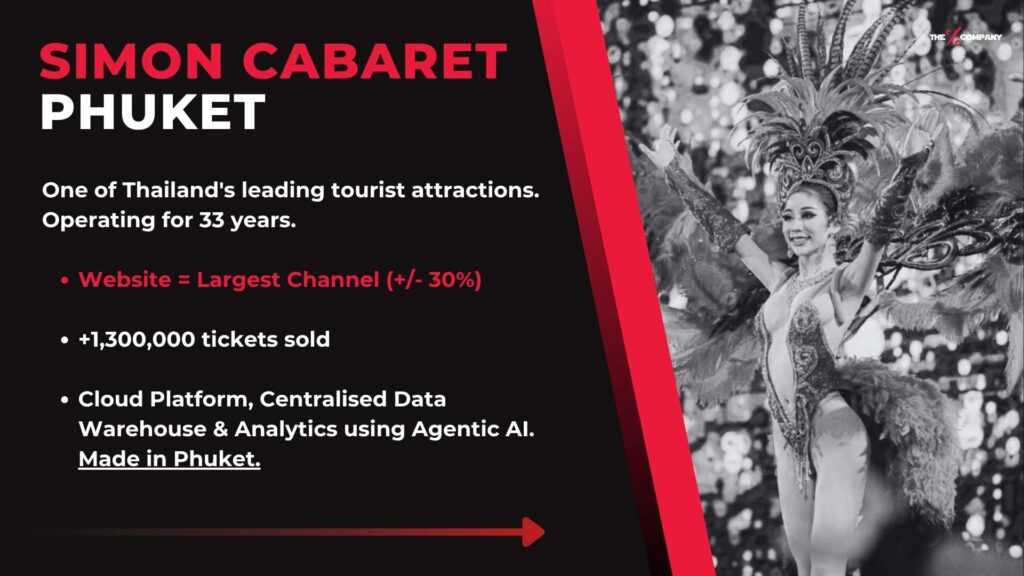
Simon Cabaret is one of Phuket’s biggest attractions, and over the past four years more than a million tickets have been sold through systems that capture guest data the business owns, contributing to hundreds of millions of THB in ticket sales. Because they own that data, their own website and guest database have become a sales channel in their own right, rather than a forwarding address for an OTA or a tour desk. And because the data sits with them, AI agents on The Percentage App ticketing platform, built here in Phuket, can analyse it and tell us what to improve next. AI isn’t the future for them. It’s already working, precisely because the data underneath it is theirs.
That’s what owning the relationship looks like once it reaches the P&L. Not a nicer logo or a bigger following. Revenue that doesn’t disappear when a platform changes its rules.
Three Things You Can Do on Monday
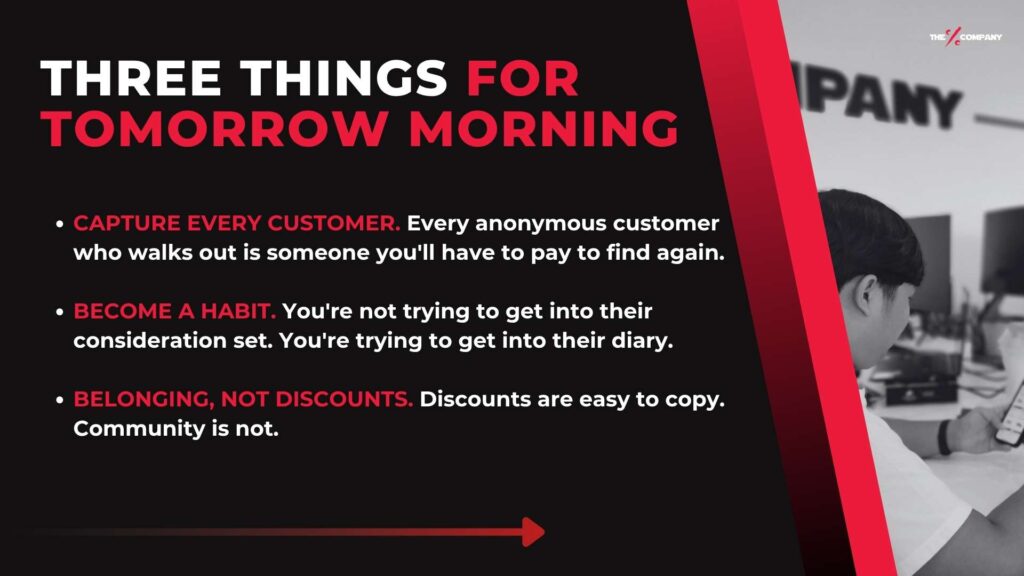
None of this requires a rebuild. It requires a change in what you treat as valuable.
- First, capture every customer. Every anonymous guest who walks out without leaving a trace is someone you’ll have to pay to find all over again. Harvest contact details wherever you reasonably can, at booking, at the table, at checkout, in exchange for something worth giving them.
- Second, become a habit. You’re not trying to get into someone’s consideration set. You’re trying to get into their diary. Sunday Roast, Wine Wednesday, Quiz Night. Showing my British roots there, but the principle holds anywhere. A reason to return on a fixed day is worth more than a one-off visit.
- Third, build belonging, not discounts. Discounts are the easiest thing in the world to copy, and the moment you train guests to wait for them, you’ve taught them to value your price over your business. Community is far harder to copy. Members’ nights, chef experiences, a reserved table for regulars, a birthday reward. People stay for places where they feel they belong.
Followers Are Rented. Relationships Are Owned
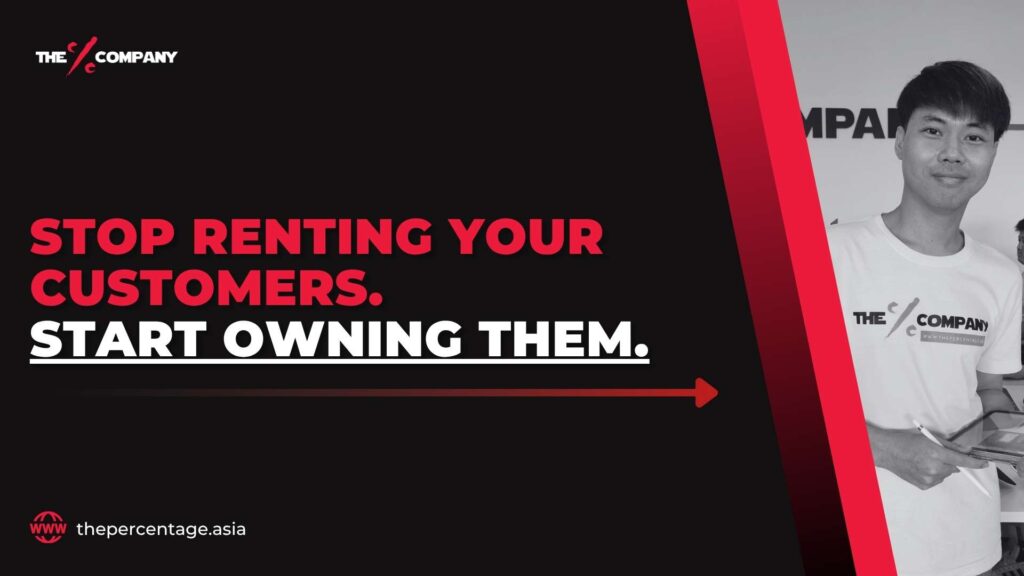
So I’ll leave you where I started, with those fifty regulars you couldn’t quite name. That list, the one you don’t yet have, is the most valuable marketing asset you’ll ever build, and the only one you’ll never have to pay for twice.
- Followers are rented.
- Platforms are rented.
- Tourists are rented.
- But relationships are owned
- Data is owned
- Community is owned.
Tourists might win you the season. Residents win you the year.
Use social media, delivery companies, OTA and any channel to get attention for your business, use AI to get smarter, use every platform that brings someone through your door. Just don’t forget to own what you earn.
At The Percentage Company, the systems we build sit at exactly this point, turning the customers you already pay to reach into data you keep, relationships you control, and revenue that compounds instead of resetting. If any of this sounds like your business, I’d be glad to have a proper conversation about it.

Written By: Edward Kennedy
Co-Founder & Director at The Percentage Company. I started working on websites in 1997 and have been a full-time techie since 2001. I’m committed to leveraging the latest technologies and digital marketing techniques to drive efficiency & improve online sales for our hotel clients. I have a 20+ year track record of success in growing independent hospitality & real estate brands.