
Hardly a week passes now without a hotel owner telling me, with genuine excitement, that they’ve built a new website over the weekend using AI. They typed a few sentences into a chat window, watched a homepage appear in front of them, and are now wondering why anyone would pay a professional to do it.
I understand the appeal completely. I started building websites in 1997, when a single page could take days and a working booking form was a small engineering project. Watching an AI tool produce a reasonable-looking site in minutes is remarkable, and I’d be lying if I said it didn’t impress me.
But after more than 20 years in hospitality technology, revenue management and digital marketing, I’ve learned that the question was never really “can we build a website?” It was always “can we build a website that keeps earning money for years?” Those are rather different questions, and the gap between them is where most of the value, and most of the risk, now sits.
Vibe Coding Is Real, Useful, and Widely Misunderstood
“Vibe coding” is the term that’s stuck for building software by describing what you want to an AI and letting it write the code. You don’t need to understand the code. You judge the result by how it looks and feels, ask for changes, and keep going until it seems right.
Let me be clear from the outset: I’m not against it. Far from it. Our own team uses AI coding tools every single day, and they’ve made us noticeably faster at certain kinds of work. Anyone in this industry who dismisses AI outright is making the same mistake hoteliers made twenty years ago when they assumed online booking was a passing fad.
The problem isn’t the tool. It’s the assumption that comes with it: that because a website can now be generated quickly and cheaply, the thinking behind a good website has become quick and cheap too. It hasn’t. AI has dramatically lowered the cost of building a website. It hasn’t lowered the cost of getting one wrong.
Where Vibe Coding Genuinely Earns Its Place
There are situations where I’d actively encourage an owner to experiment. Some of the most useful ones aren’t obvious.
- As a better brief. Most website projects start with words like “luxurious but relaxed” or “modern, but not too modern”. Those phrases mean something different to every person in the room. An owner who spends an afternoon vibe coding a rough version of what they like hands us something far more valuable than a mood board: a working picture of their taste. We’d much rather start from that than from adjectives.
- For disposable pages. A microsite for a New Year’s Eve gala or a Songkran package that lives for six weeks and is then retired doesn’t need to be engineered for five years. Speed matters more than longevity, provided it doesn’t take payments or collect guest data on its own.
- To test an idea before investing in it. Thinking about a new wellness package or a different room upgrade flow? A quick prototype shown to staff and a handful of regular guests will tell you whether the idea has legs before you spend serious money building it properly.
- For internal tools. A group quotation calculator, a housekeeping checklist or a simple staff rota page never faces a guest, never handles a card and rarely matters to Google. That’s exactly where “good enough” genuinely is good enough.
Inside The Percentage Company, the same tools make our experienced people faster. We use AI to produce working prototypes during client meetings rather than a week later, to generate variations of a booking page for conversion testing, to write the scripts that move thousands of future reservations between property management systems (the software that runs a hotel’s reservations and front desk), and to speed up audits of a client’s site. The difference is that every line it produces is reviewed by someone who knows what good looks like and, just as importantly, what bad looks like.
I think of AI as an extraordinarily quick junior developer who never sleeps, never complains, and occasionally makes things up with total confidence. In the hands of an experienced team, that’s a superpower. Left unsupervised, it’s a liability.
A simple rule of thumb: the more a page touches your guests’ money, their personal data, or your brand, the more it needs expert hands.
A Hotel Website Is a Revenue Engine, Not a Brochure
Here’s the part that rarely shows up in a weekend build. What a guest sees on the homepage is only a small part of what makes a hotel website profitable. Most of the rest is invisible, and it’s where bookings are won or lost.
A properly built hotel website has to connect cleanly to your booking engine, so rates and availability are always accurate and the hand-over from “browsing” to “booking” doesn’t lose people along the way. It has to carry conversion tracking that tells Google and Meta which campaigns actually produce bookings, otherwise your ad budget is optimising for clicks rather than revenue. It has to load quickly on a mid-range phone over a patchy mobile connection, because that’s how a great many travellers are browsing when they decide. It needs structured data (behind-the-scenes code that tells Google and AI search tools exactly what your property is, where it is and what it offers) so you can be found and recommended. And it needs to capture guest data properly, so your CRM can bring people back for a second and third stay.
None of this is glamorous. All of it is commercial. When we rebuild a client’s website as part of a full direct booking strategy, we’ve seen website conversion rates improve by 55% on average, and direct booking share move from around 13% to over 30% within twelve months. Those results don’t come from a prettier homepage. They come from the plumbing, the measurement, and the hundreds of small decisions that a professional makes almost without thinking.
A site that looks impressive but converts at half the rate isn’t a saving. It’s a cost you pay every month, quietly, in bookings that went to an OTA instead.
The Sameness Problem
There’s a deeper issue with AI-generated websites, and it’s built into how the technology works. An AI model produces the most likely answer based on everything it has seen before. Ask it for a boutique beach resort website and it gives you the average of every boutique beach resort website it has ever encountered.
The result is what people have started calling “AI slop”: competent, polished, and utterly forgettable. A full-width hero photo. “Escape to paradise.” “Discover tranquillity.” Three icons for the pool, the spa and the restaurant. Ask a dozen Phuket owners to build their site this way and you’ll get a dozen variations of the same page.
This matters more than it might seem. On Booking.com and Agoda, your property already sits in a grid alongside hundreds of others, reduced to a photo, a score and a price. Your own website is the one place you fully control the story. It’s where a guest decides whether you’re worth booking direct, and whether you’re worth paying a little more for. If your website looks like everyone else’s, you’re competing on price, and price is the battle OTAs are designed to win.
There’s a newer angle too. AI search tools like ChatGPT, Gemini and Google’s AI Overviews increasingly recommend hotels by drawing on what’s genuinely distinctive about them. Generic copy gives them nothing to work with. Specific, original content about your rooms, your location and your people gives them a reason to mention you.
This is why we build every site from the property outwards rather than from a template inwards. We start with who your guests actually are, what they value, and what makes your property worth choosing. That’s the foundation for a site nobody else could have, and it’s a large part of why our clients typically see ADR (average daily rate, the average price paid per occupied room) rise by around 12% in their first year with us.
Security: When a Little Knowledge Is More Dangerous Than None
An owner with no website at all knows they need help. An owner with a vibe-coded website often believes they don’t, and that’s where the real danger lies.
AI coding tools are very good at producing code that works. They’re far less reliable at producing code that’s safe. The issues we come across are rarely dramatic on the surface: a secret access key left visible in the page code, a contact form that anyone can abuse to send spam or worse, a database left open to the internet, software components that were out of date on the day they were installed, or no backups at all. There’s even a growing problem of AI suggesting software packages that don’t exist, which attackers then register under that exact name and fill with malicious code. None of these will show up when you admire your new homepage. All of them can be found by an automated scanner within days of going live.
For a hotel, the stakes are higher than for most small businesses. Your website collects names, email addresses, phone numbers, travel dates and sometimes payment or passport details. In Thailand, that brings obligations under the Personal Data Protection Act (PDPA), and guests anywhere expect their information to be handled carefully. A breach doesn’t just cost you a website. It costs you trust, and potentially a great deal more.
Then there’s the question nobody asks at launch: who fixes it at eleven o’clock at night in the middle of high season? When a site is hacked, starts redirecting visitors to a gambling page, or simply stops taking bookings, you need someone who can diagnose what’s actually happened. Asking the same AI tool that wrote the code to fix it, without understanding the problem, can easily make things worse. The tool can’t see your server, your logs or your history. A professional can.
I’ve written separately about how AI is making cyber attacks faster and more frequent for independent hotels. The same technology that lets an owner build a site in an afternoon also lets an attacker probe thousands of sites in the same time. Preparedness, not hope, is the only sensible strategy.
Websites Evolve: Launch Day Is the Starting Line
The biggest misconception about vibe coding isn’t technical. It’s the idea that a website is a one-off project: build it, launch it, done.
The websites that perform best for our clients look quite different two years after launch, and that’s entirely deliberate. Seasonality in Phuket and Samui means the site needs to shift emphasis between high-season rate integrity and low-season demand generation. New source markets open up and need their own language versions or landing pages. Google changes how it ranks and displays hotels. AI search changes how travellers discover them in the first place. Packages are tested, kept or dropped. Booking flows are refined based on where real guests hesitate or leave.
Every one of those changes is informed by data, and good decisions depend on knowing which data to trust and which to question. That judgement doesn’t come from a prompt. It comes from having watched hundreds of hotel websites succeed and fail over many years.
A one-shot AI site is a snapshot of one afternoon’s thinking. A properly managed website is a living commercial asset that compounds in value. Over five years, the difference between the two isn’t a few thousand baht saved at the start. It’s the cumulative revenue of every booking the better site won and the weaker one lost.
This is also why the long-term relationship matters. Our clients stay with us for an average of 2.86 years, and one in four stays for four years or more. That continuity is what allows a website to keep improving rather than slowly decaying until it’s time for another rebuild.
Why Expertise Matters More in the Age of AI, Not Less
There’s a popular argument that AI will make expertise redundant. In my experience, the opposite is happening.
When anyone can produce something that looks professional, looking professional stops being a differentiator. What matters instead is knowing what to build, why, and in what order. Knowing that a two-step booking flow converts better than a five-step one for your guest profile. Knowing which tracking setup will give your ad campaigns the signals they need. Knowing what a healthy direct booking share looks like for a 40-room boutique property in Kata versus a 200-room resort in Bophut. Knowing when a design choice is quietly costing you revenue.
AI is brilliant at answering questions. It’s far less helpful when you don’t know which questions to ask. That’s what twenty years of experience buys you: not the ability to type code, but the instinct to spot the problem before it becomes expensive.
The best analogy I can offer is the kitchen. Anyone can buy professional knives and follow a recipe online. That doesn’t make them a head chef, and it certainly doesn’t mean they should run a hotel restaurant on Saturday night. The tools have become accessible. The judgement hasn’t.
For a small business, the real comparison isn’t “AI site for almost nothing” versus “professional site for a fee”. It’s the total revenue each approach produces over the next five years, minus everything it costs, including the bookings lost, the OTA commissions paid that didn’t need to be, and the price of fixing what went wrong.
Build Fast Where It’s Safe, Build Properly Where It Counts
AI has changed how websites are built, and it’s changing how we work at TPC every week. I welcome that. Owners who experiment with these tools will understand their own businesses and their guests a little better, and that makes them better partners.
But a hotel website that earns direct bookings year after year has never been about how quickly it was built. It’s about how well it was thought through, how securely it was put together, and how carefully it keeps evolving. Saving a small amount at the start rarely makes up for years of weaker conversion, generic positioning and avoidable risk.
The cheapest website is rarely the one that costs the least to build.
At The Percentage Company, we combine AI-assisted speed with more than two decades of hands-on experience in hotel distribution, revenue management and digital marketing. Every site we build is designed around the property it represents, connected to the systems that drive revenue, and looked after long after launch. Because most of our work is commission-based, we only do well when your direct bookings do.
If you’ve built something with AI and would like an honest view of how it’s likely to perform, or you’re weighing up whether to build it yourself or properly, we’d be happy to take a look and have a conversation.
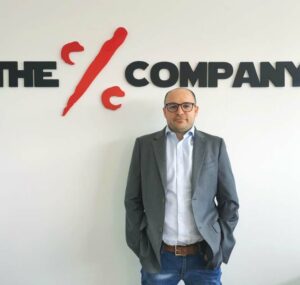
Written By: Edward Kennedy
Co-Founder & Director at The Percentage Company. I started working on websites in 1997 and have been a full-time techie since 2001. I’m committed to leveraging the latest technologies and digital marketing techniques to drive efficiency & improve online sales for our hotel clients. I have a 20+ year track record of success in growing independent hospitality & real estate brands.