

There’s a phrase I hear a lot from hotel owners, usually said with a slight wince: “we’re running lean.” It’s meant as an apology, as though operating without a large team and a big overhead is a compromise forced on them by circumstance. After twenty years watching hotels of every size succeed and fail across Thailand, I’ve come to see it very differently. Running lean, done well, isn’t a compromise. It’s an advantage. Some of the most profitable independent properties I know are also some of the leanest, and that’s not a coincidence.
But there’s a crucial distinction that decides whether lean is a strength or a slow decline. Lean does not mean understaffed and overstretched, with a small team drowning in work and cutting corners to cope. That’s not lean, that’s fragile, and it burns people out and shows up in the reviews. True lean operation means running an efficient, well-systemised business where technology handles the repetitive work and a focused team handles what matters. The difference between those two is almost entirely about systems, and that’s what smart operators in 2026 do differently.
Lean Is Not the Same as Understaffed
Let me draw this line clearly, because getting it wrong is how good hotels quietly run themselves into the ground.
An understaffed hotel copes by asking too few people to do too much. The front desk is buried in admin, the manager is doing three jobs, nobody has time for the guest with a real problem, and the whole operation runs on the goodwill and exhaustion of a stretched team. It works, just about, until a key person leaves or the high season hits, and then it doesn’t. This isn’t efficiency, it’s a business held together with willpower, and it’s one resignation away from a crisis.
A genuinely lean hotel looks completely different from the inside even if the headcount is similar. The repetitive work, the reconciliation, the standard guest messages, the data entry, the reporting, is handled by connected systems rather than by people. The team is small but not stretched, because they’re not spending their days on drudgery. They’re doing the work that actually needs a human, and they have the capacity to do it well. The difference between a fragile hotel and a lean one isn’t how many people you employ, it’s how much of the pointless work you’ve removed from them.
Smart operators understand that you don’t get lean by cutting people. You get lean by cutting work.
The Hidden Cost of the Fragmented Stack
The single biggest source of pointless work in most independent hotels is a set of systems that don’t talk to each other. It’s worth understanding this properly, because it’s usually invisible until someone points it out.
A typical independent hotel accumulates tools over the years: a booking engine here, a separate CRM there, an email tool, a channel manager, a POS for the restaurant, accounting software, maybe a loyalty system. Each does its job in isolation, and none of them share data. So a booking made in one system has to be manually reflected in another. Payment taken in one place has to be reconciled by hand in the accounting software. Guest data sits in four separate places, none of them complete. Every gap between these disconnected tools is a task someone on your team has to perform by hand, and those tasks are precisely the exhausting, error-prone, guest-invisible work that makes a hotel feel understaffed no matter how many people it employs.
This is why the average hotel we work with is running three to six separate tools that could be doing the work of one connected system. Each subscription costs money, each requires training, and, worst of all, each gap between them costs staff time. Consolidating that fragmented stack into a single connected system is one of the highest-return operational moves an independent hotel can make, and it’s the foundation of running genuinely lean.
What Smart Operators Automate First
Lean operators are disciplined about what they automate, and they follow a sensible order. They start with the work that’s most repetitive, most error-prone, and least valued by guests, because that’s where automation delivers the biggest relief for the least risk.
Reconciliation and accounting come first, because they’re pure administrative overhead with no guest-facing value, and connecting your booking engine, payments, and accounting so that revenue posts automatically removes a huge, invisible time cost. Guest communication comes next, automating the predictable confirmations, pre-arrival details, and recurring questions so the team handles exceptions rather than repetition. Reporting follows, because a lean operator wants to see occupancy, pace, and revenue at a glance every morning rather than assembling a report by hand. And the connective tissue underneath all of it is a single system where the data flows automatically, so that nobody is ever copying information from one place to another.
Notice what’s not on that list: the guest experience itself. Smart operators automate the back office aggressively and protect the front of house carefully. The reconciliation is invisible to the guest, so automate it completely. The welcome is the whole point, so give your freed-up team the time to do it brilliantly.
Lean Operations Are More Resilient, Not Less
There’s a resilience benefit to running properly lean that owners often miss, and in a market as seasonal as Thailand’s it matters a great deal.
A hotel that depends on a stretched team performing manual work by hand is fragile in exactly the moments that matter most. When high season hits and volume triples, the manual processes buckle. When a key staff member leaves, the knowledge and the workload they were carrying create a crisis. A properly systemised lean operation absorbs these shocks far better. The systems handle the volume without complaint, the automated processes don’t resign, and the smaller focused team isn’t already running at its limit, so it has capacity to absorb a surge. Lean, done right, isn’t more precarious than a big operation. It’s more robust, because it doesn’t depend on heroics to function.
This is the quiet reason the leanest independent hotels are often the most profitable and the least stressed. They’ve built a business that runs on systems rather than on the exhaustion of their people, which means it scales through the season, survives staff changes, and leaves margin that a bloated, manual operation gives away in overhead and error.
Lean Is a Choice, Not a Constraint
I want to leave you with the reframe I opened with, because it changes how you approach the whole question. Running lean isn’t the thing you settle for when you can’t afford more staff. It’s the thing you choose because it’s a better way to run a hotel: more efficient, more profitable, more resilient, and, when the systems handle the drudgery, more human at the point where it counts.
The operators who thrive in 2026 won’t be the ones with the biggest teams or the most technology for its own sake. They’ll be the ones who’ve been ruthless about removing pointless work and thoughtful about protecting valuable work, running a tight, well-systemised operation that gives them both margin and the capacity to look after their guests properly. That’s the standard worth aiming for, and it’s very achievable.
At The Percentage Company, we help independent hotels run genuinely lean by consolidating the fragmented stack into one connected system and automating the work that shouldn’t need a human, so your team is focused, not stretched, and your operation is efficient, not fragile. If you suspect you’re running understaffed rather than truly lean, we’d be glad to show you the difference and where to close the gap.
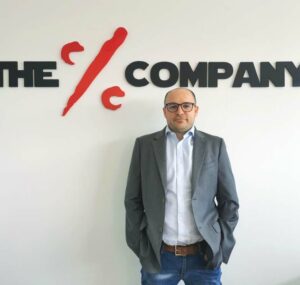
Written By: Edward Kennedy
Co-Founder & Director at The Percentage Company. I started working on websites in 1997 and have been a full-time techie since 2001. I’m committed to leveraging the latest technologies and digital marketing techniques to drive efficiency & improve online sales for our hotel clients. I have a 20+ year track record of success in growing independent hospitality & real estate brands.